What we've been up to at UNESCO MGIEP: Issue 1
An activities report from UNESCO MGIEP
Distinguished Lecture by Irina Bokova,
Director-General, UNESCO
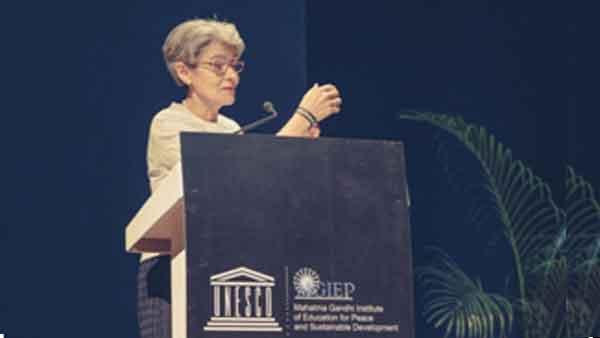
Irina Bokova,
Director-General, UNESCO
The UNESCO MGIEP Distinguished Lecture Series invites speakers of global eminence from among the world’s leading intellectuals and policymakers to spark transformative ideas for our shared future. These Distinguished Lectures are expected to inspire a larger international dialogue on a more peaceful and sustainable world, built through better education, inclusive spaces, and global citizenship.
25 November, 2014, New Delhi: Irina Bokova, the Director- General of UNESCO, addressed a mixed crowd of policymakers and young students at NMML, Teen Murti Bhavan, New Delhi, at the opening lecture of the Distinguished Lecture Series, stressing on the role of education as the cornerstone in developing a peaceful and sustainable world.
“We need new skills for a new world,” the Director-General said. “Real sustainability goes beyond the reach of states, it must be grounded in the rights and dignity of every woman and man, in their abilities, skills and behaviour, in their capacity to transform their lives, anticipate the future, make the most of change.” She was welcomed by Prof. Anantha Kumar Duraiappah, Director UNESCO MGIEP, who also spoke on the role of transformative education in the Post 2015 Global Development Agenda and stressed its formal and informal facets. “Education alone can build the foundation of a sustainable and peaceful world, education alone can transform human approach to the world around,” he said. The event was presided over by Dr Karan Singh, Chairperson, UNESCO MGIEP’s Governing Board. The vote of thanks was delivered by Mr Shigeru Aoyagi, Director and UNESCO Representative to India, Bhutan, Maldives and Sri Lanka.
Launch: Inclusive Wealth Report 2014
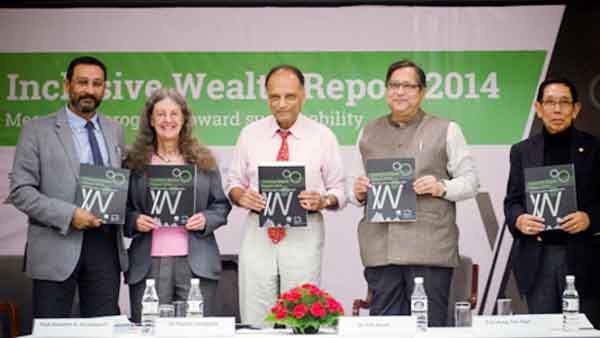 10 December, 2014, New Delhi: The Inclusive Wealth Report (IWR) 2014 was jointly launched by Sir Prof. Partha Dasgupta, Prof. Aung Tun Thet, Prof. Barbara Fraumeni, Dr TC Anant and Prof. Anantha Kumar Duraiappah at the India International Centre last December.
“This report on changes in the three key types of wealth-related capital challenges the narrow perspective presented by GDP and underscores the need for integrating sustainability into economic evaluation and policy planning,” said Dr Dasgupta, Professor Emeritus of Economics, University of Cambridge.
While IWR 2012 was based on data from 20 cou ntries, the recent one has massively increased the reach of the study by covering 140 countries. The report is a tool for making macroeconomic decisions on what and where to invest, Dr. Duraiappah added, as well as “a key educational resource that can be used by students of both economics and sustainability science to understand the human development, and economic growth of countries and their inter-linkages through trade and environmental pressures, such as climate change.” The event witnessed the introduction of the IWR by Sir Prof Partha Dasgupta, followed by a video address by Dr Shashi Tharoor.
Explaining the idea of wealth, Dr Tharoor said, “Chopping off a tree to sell timber adds to the GDP while planting a tree does not, however, it is the planted tree that will add to the nation’s wealth in the long run.” The session concluded on a presentation of the key findings of the IWR 2014. UNESCO MGIEP is working to adapt the IWR’s theories and indicators to curriculum formats, and embed inclusive wealth into the economics curricula at the university level.
The Second UNESCO MGIEP Distinguished Lecture
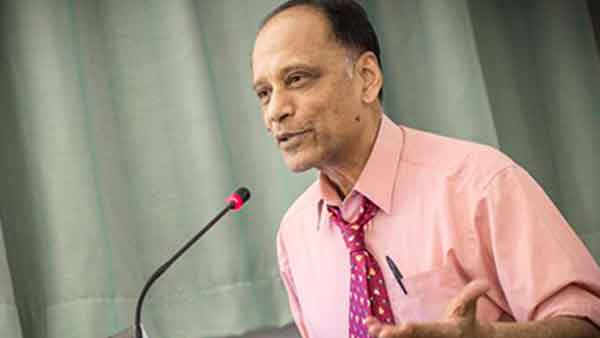 As part of the Distinguished Lecture Series conducted by UNESCO MGIEP, Sir Prof Partha Dasgupta, Professor Emeritus, University of Cambridge, delivered the second lecture of the series, at the Delhi School of Economics, University of Delhi, on 11 December 2014. In his discourse on ‘Wellbeing and Wealth’, he explained the mathematical and analytical procedures taken up in the The Inclusive Wealth Report, for measuring, wellbeing and wealth.
UNESCO MGIEP at World Conference on ESD
7 November, 2014, Aichi-Nagoya, Japan: The UN Decade on Education for Sustainable Development (2005-2014) was concluded at the UNESCO World Conference on ESD, organized at Aichi-Nagoya in November 2014. The mega conference celebrated the achievements of the decade, identified key learnings and outcomes from the activities executed and launched the Global Action Programme (GAP) on ESD for the coming
five years.
The objective of GAP is ‘to generate and scale-up action in all levels and areas of education and learning, in order to accelerate progress towards sustainable development’. The programme has identified youth as one of the five priority areas, and seeks to support youth in their role as change agents for sustainable development through Education for Sustainable Development.
UNESCO MGIEP made its presence felt on different occasions at the conference, such as Stakeholder Meetings, held as a prelude to the conference in Okayama and Nagoya, at the UNESCO Associated School Project Network, Youth Conference, Global UNU RCE Conference and International Conference on Higher Education for Sustainable Development.
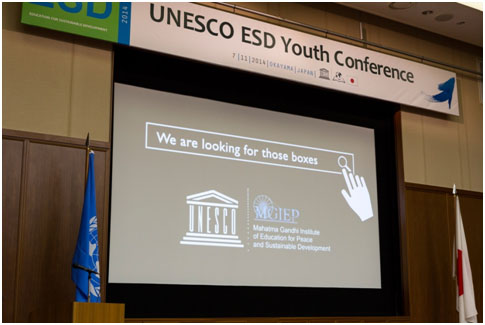
Unbox your ideas for global development with MGIEP Youth Programme: Presentation by Anantha Duraiappah, Director, UNESCO MGIEP at ESD Youth Conference
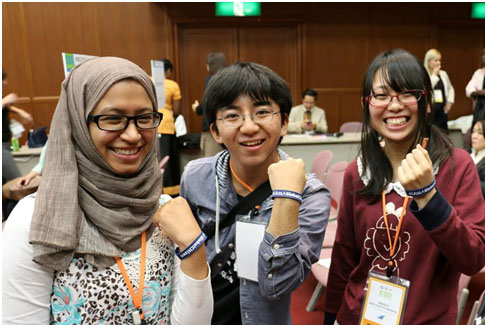
The wrist bands of support, belief, and conviction #IAMAGLOBALCITIZEN: Youth participants at the ESD Youth Conference Credits@Goi Peace Foundation
YESPeace Network launched!
10 November, 2014, Aichi-Nagoya, Japan: The youth forms a priority area of UNESCO MGIEP’s work, and the Institute’s mission is to bring their voices, aspirations, and ideas into the world of policy and social initiative. The Institute also believes that if the youth is going to participate in the process of creating a more peaceful and sustainable world, they must have the right tools and agency with which to do it. UNESCO MGIEP launched the Youth for Education, Sustainability and Peace (YESPeace) Network to mobilise youth action on sustainable development, peace education and global citizenship. The network is recognized as an important contribution to the Global Action Programme.
Over the last few months, in its mission to bring forth the concerns of youth to policy makers, UNESCO MGIEP has built partnerships with organizations, academic think tanks, advocacy groups, such as UNU- IAS, Youth Advocacy Group of the UN Secretary – General’s Global Education First Initiative (GEFI), Rhodes University South Africa, Active Change Drivers, and the German Development Agency-GIZ, to establish a strong foundation for the Network.
Being a network of networks, YESPeace is a unique global initiative positioned strategically to support youth initiatives in creating education systems, best suited to their future. The network invites youth, youth groups, and organizations working on youth, youth movements, from around the world, to work together on issues of global citizenship, peace-building, and sustainable development.
The YESPeace network advocates for building capabilities of the youth, tries to understand and comprehend the challenges they face at local and global levels, and develop strategies enabling them to realize their full potential as citizens of the world.
The network will create a new social contract on reaching out to the youth on the peripheries of society, thus mobilizing action from local to global. Leadership Programme, Campus Ambassadors Programme, Common Youth Policy Platform, and online engagement are some of the activities of YESPeace.
The network is geared to provide a channel to bring forth the collective youth voice to policy makers and enhance the access of youth to the arena of policy making.
UNESCO MGEIP’s Gaming Challenge announced at
NASSCOM Game Developers Conference in Pune
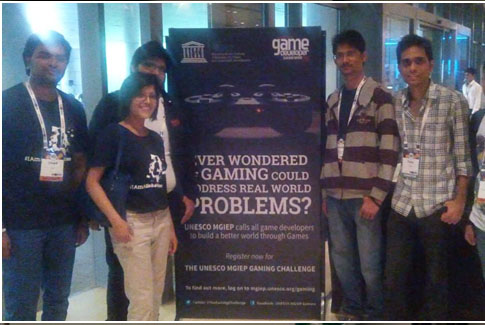
Innovator Anamika with Indian game developers at the NASSCOM Game Developers Conference in Pune, India. The UNESCO MGIEP’s Gaming Challenge has generated much interest among the gaming community.
UNESCO MGIEP Highlights Role of Games, Apps and Innovation for Difference Learning at UNESCO’s
International Conference on Disability
UNESCO MGIEP’s Innovation programme organised a parallel session – ‘Learning Differently for Peace and Sustainability, Games, Apps and Innovation’ – as part of UNESCO’s International conference on the Role of ICT for Disability on 26 November 2014, in New Delhi.
Innovator Anamika Gupta Moderated the session. The speakers included a diverse panel of experts including Mr. Clayton Lewis, Prof of Computer Science from University of Colorado; Mr. Jeff Poblocki, Diretor of Technology at the Gow School which specializes in education for dyslexic students; Mr Prashu Sinhal, Head of Sustainability at Nokia, India; and Mr Devesh Kumar, an young entrepreneur and founder of D Labs that makes apps for dyslexic students. The session was Rapporteured by Prof Susan Moissey, Programme Director and Associate Professor at the Centre for Distance Education, University of Athabasca, Canada.
The session higlighted some of the interesting apps and technology-assisted tools that have addressed key concerns of difference learning. The session emphasized the need for collaboration between educational institutions, researchers, students, parents, technology and mobile companies, to make learning more relevant and empowering for these students.