An Ahinsa Dialogue on ‘Creating a Culture of Peace’ – a conversation on peace, education and neuroplasticity
The third Ahinsa Dialogue series was held at the UNESCO Headquarters, Paris, France, marking the International Day of Non-Violence as well as the kickstart of Mahatma Gandhi's 150th birth anniversary celebrations on October 2, 2018. The evening witnessed a highly engaging discussion between Sadhguru and Gregoire Borst on peace, education and neuroplasticity. Read more here.
October 2, 2018 | UNESCO Headquarters, Paris, France
In commemoration of the beginning of the yearlong celebration of Mahatma Gandhi's 150th birth anniversary and the International Day of Non-Violence 2018, the UNESCO Mahatma Gandhi of Education for Peace and Sustainable Development (MGIEP) and the Permanent Delegation of India to UNESCO jointly organised the third Ahinsa Dialogue on October 2, 2018. The dialogue featured Sadhguru in discussion with Gregoire Borst, Professor of Developmental Psychology and Cognitive Neuroscience of Education, LaPsyDE on ‘Creating a Culture of Peace’. The discussion was moderated by Dr. Anantha Duraiappah, Director, UNESCO MGIEP, in which Sadhguru and Gregoire engaged in a conversation on 'Peace, Neuroplasticity and Education'. Over 500 participants attended the lecture, including various dignitaries, educators, academics, policy-makers and youth.
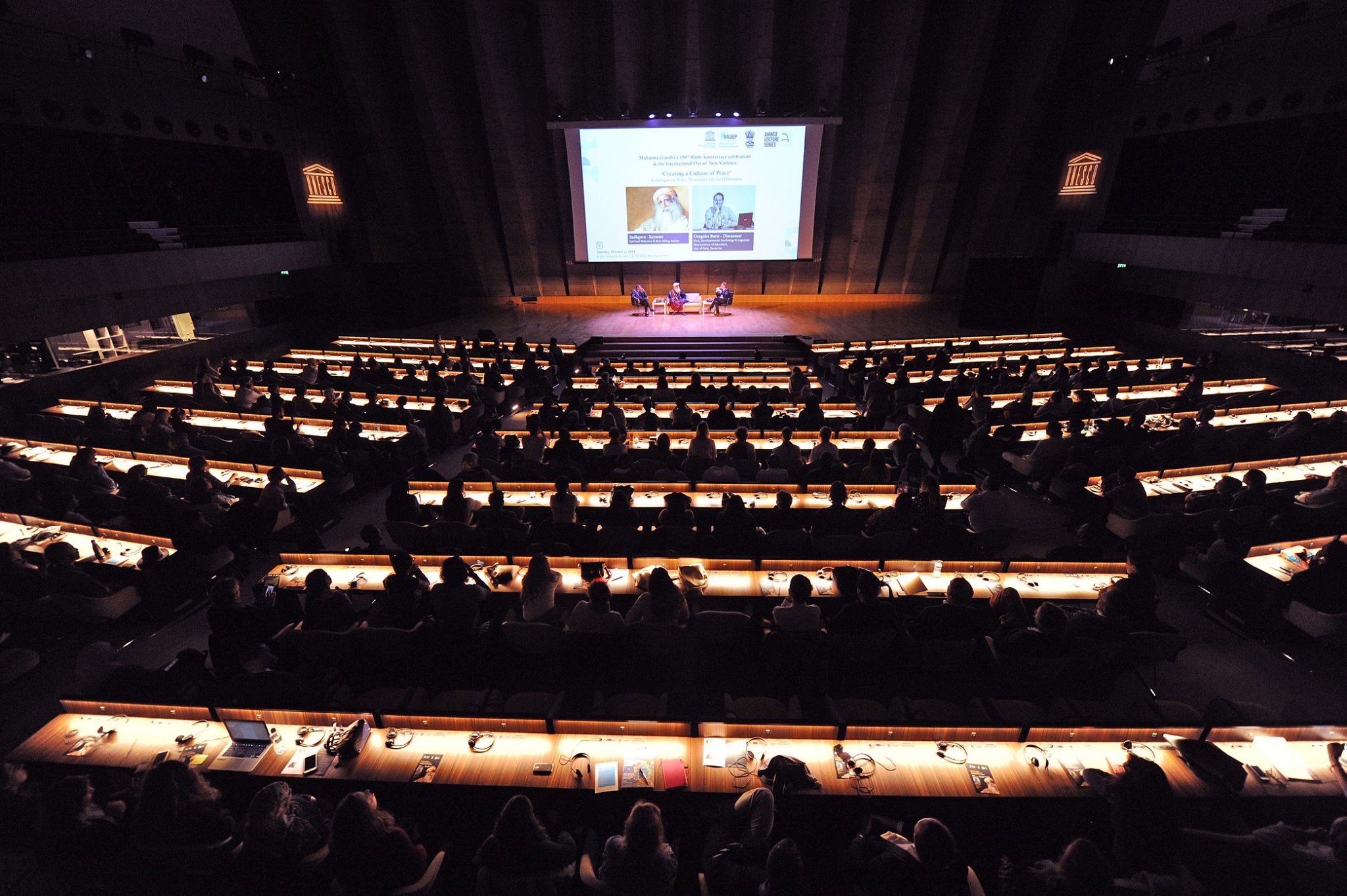
The event commenced with opening remarks by the Deputy Director General of UNESCO, Mr. Qu Xing, who discussed the relevance of the Mahatma’s message in an increasingly volatile world. Thereafter, the Indian Ambassador to France, H.E. Mr. Vinay Mohan Kwatra, spoke briefly about the importance of building a culture of peace in the world and about the Mahatma’s legacy of peace both in South Africa and in India. The welcome notes were followed by a highly engaging two-hour long dialogue between Sadhguru and Prof. Borst.
Speaking on the importance of creating a culture of peace, Sadhguru stated that “Unless we create peaceful human beings, there cannot be a peaceful world because minus the human beings, the world is just great as it is”. Sadhguru further added that that Yoga was a scientific tool “to create a chemistry of peacefulness” within human beings.
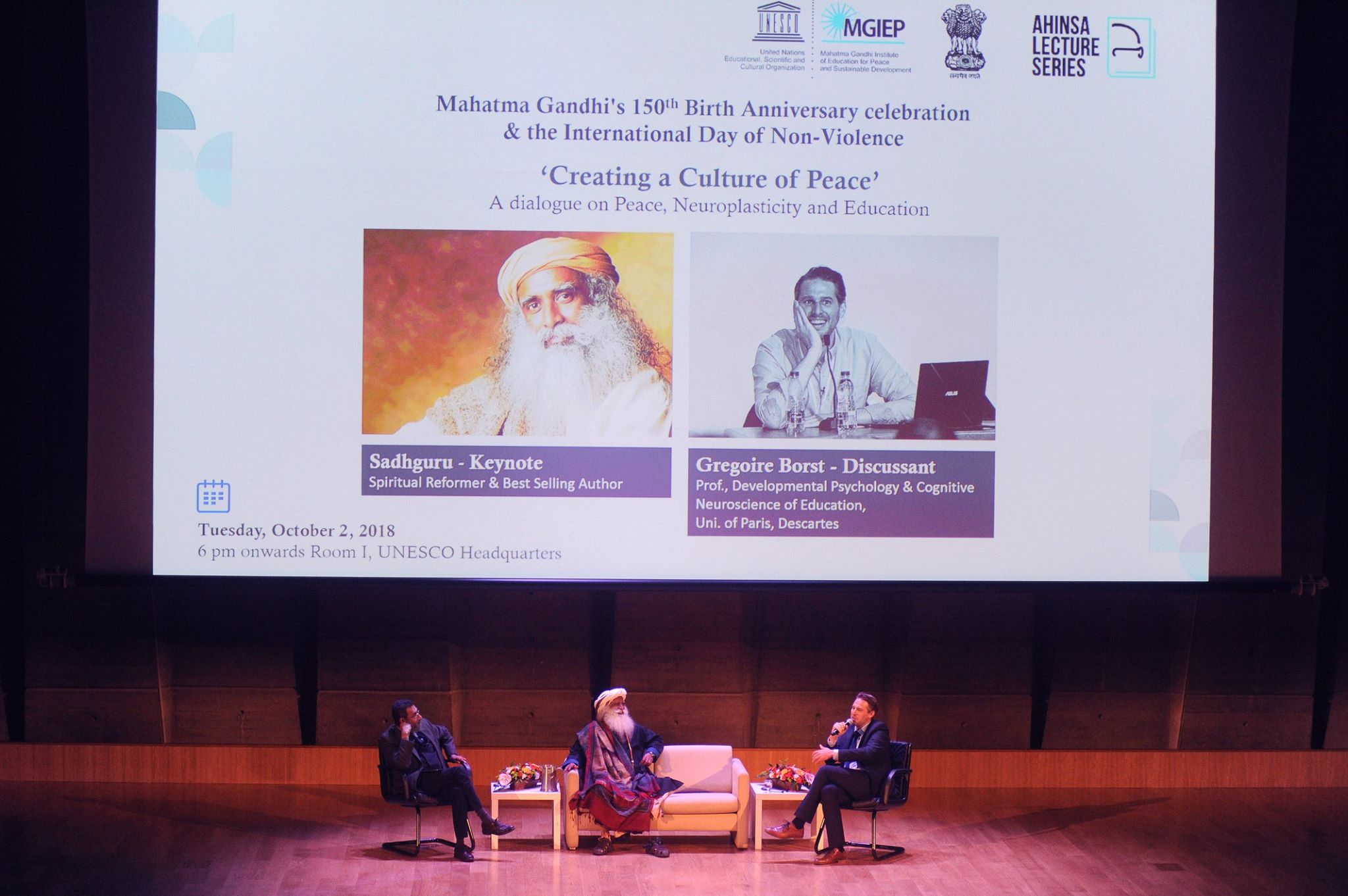
Dr. Duraiappah spoke of UNESCO MGIEP’s work in education for peace and sustainable development by employing the whole-brain approach to education, with programmes that are designed to mainstream Socio-Emotional Learning in education systems, innovate digital pedagogies and to put youth as global citizens at the centre of the 2030 Agenda for Sustainable Development.
Dr. Duraiappah stated that “unless our present education systems embrace building emotional intelligence, we might end up in a world of highly literate but depressed people; this is not sustainable and will not build a peaceful and sustainable societies.”
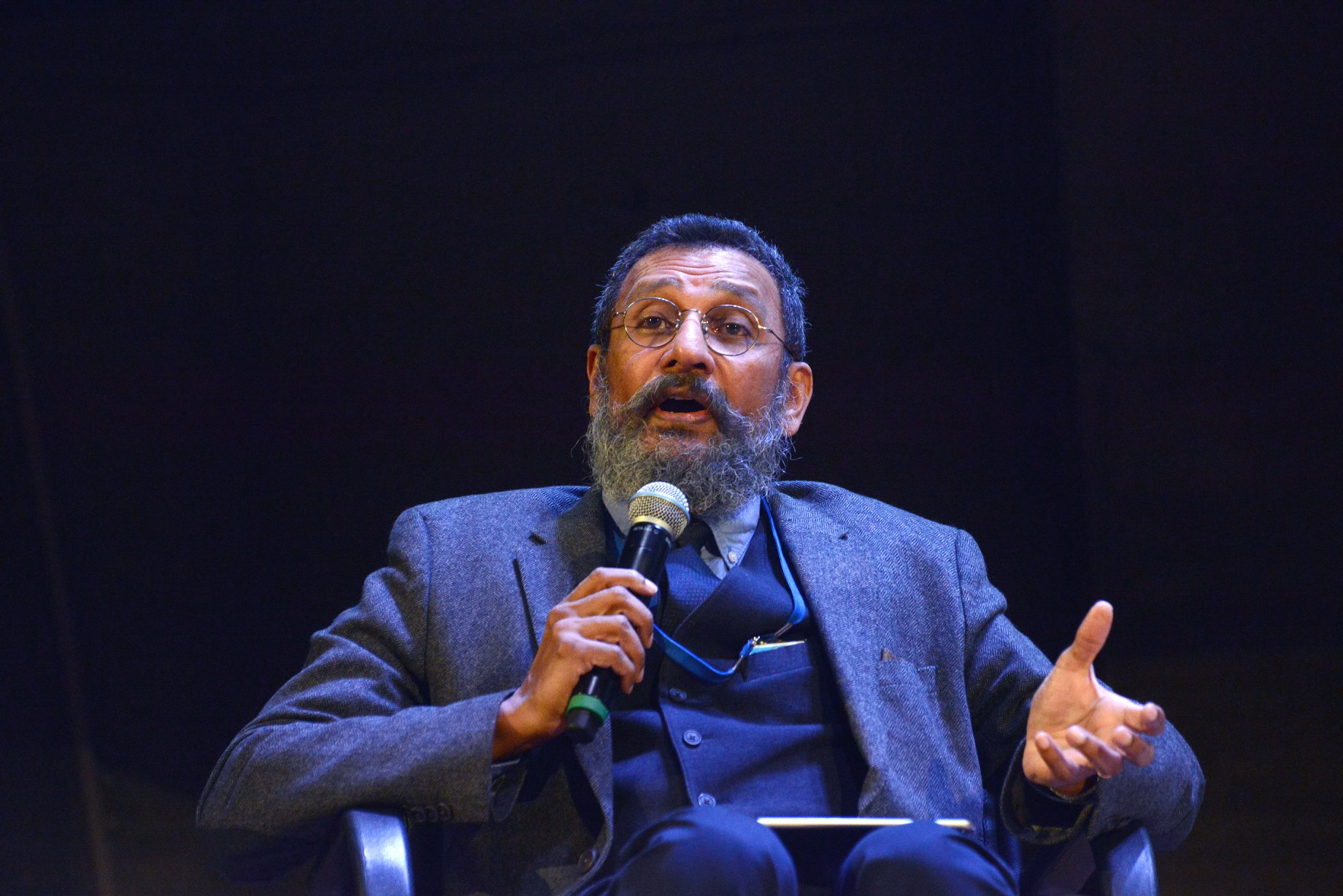
Asserting that human beings are intrinsically altruistic, Prof. Borst quoted a study in which 6-month-old babies demonstrated this hypothesis to be true. The babies were exposed to two kinds of puppets: those that demonstrated altruistic and selfish behaviours. The babies always chose the better behaved puppets said Prof. Borst adding that as the brain evolves in the social environment it is exposed to, it is imperative to foster a culture of peace in each and every individual.
Sadhguru and Prof. Borst also discussed the dire need to reform education systems to equip children to handle their thought, emotion and the world around them in a more balanced and compassionate manner. Both agreed that excessive competition in schooling systems were preventing the natural human genius in children, from blossoming.
The dialogue ended with an interactive Question & Answer session with the audience, in which participants were interested in understanding prospective solutions to the education crisis in Syria, alleviating human suffering, and understanding models of alternative schooling systems. Sadhguru said that with the conflict in Syria nearing its end, educational institutions, non-governmental bodies and the UN should consider setting up institutions on a war footing that can “engage the children beyond what they have experienced.”
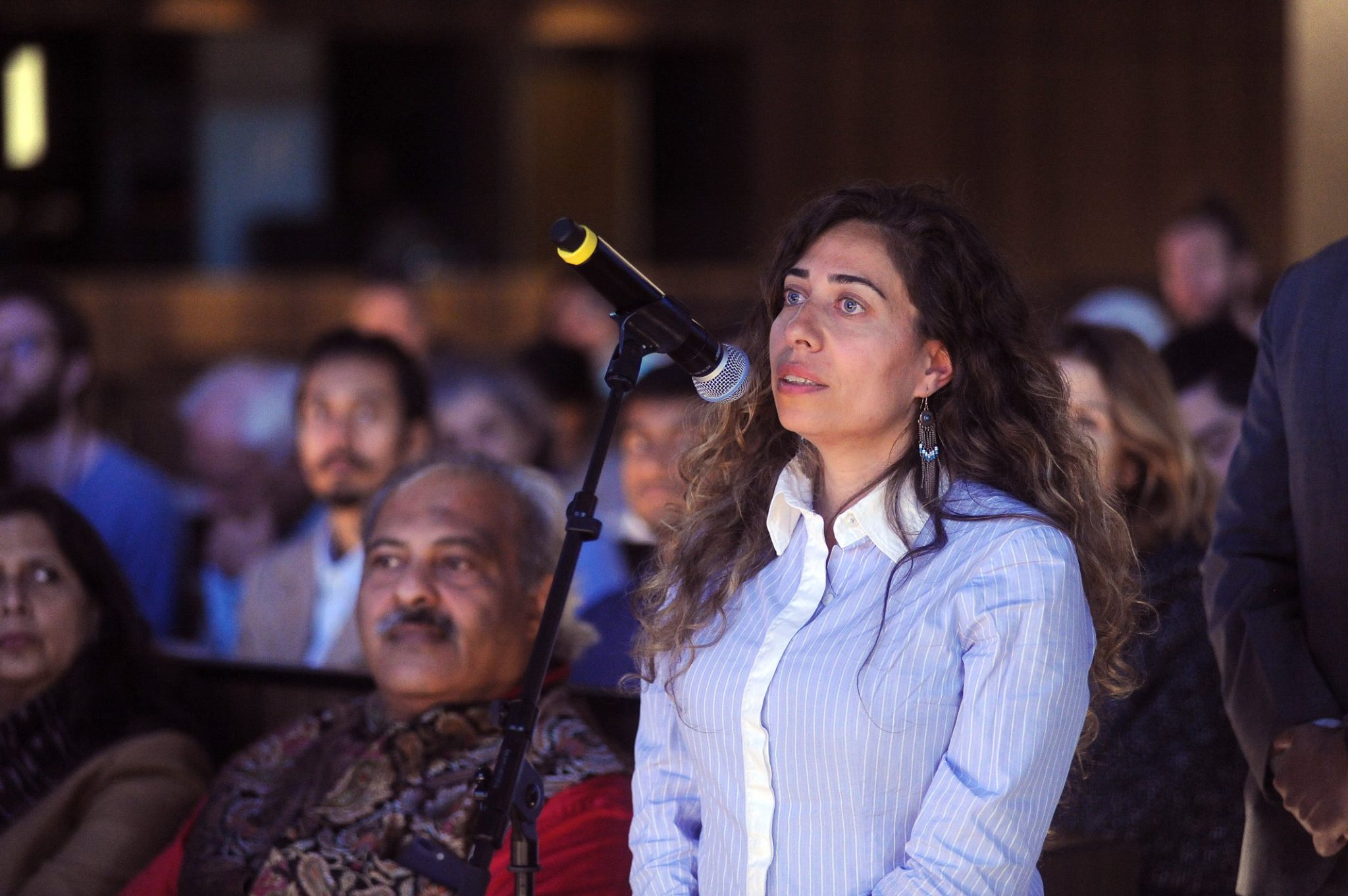
Admitting that it was no mean feat, Sadhguru said that the most important thing is to make children understand from an early age that “my body and my mind should take instructions from no one else but me” and provide them with the necessary tools to make this a living experience in their lives.
The Ahinsa Dialogue was followed on October 3, 2018 by a Facebook LIVE on the corporate UNESCO Facebook channel between Sadhguru and George Papagiannis, Chief of Media Services, UNESCO. The LIVE saw over 84,000 views.
About the Ahinsa Lecture Series
Ahinsa is derived from Sanskrit word hims meaning injury and its opposite (a-hiṃsā meaning without any injury) refers to non-violence. This ethical philosophy was popularised by Mahatma Gandhi, the greatest champion of nonviolence in the world. The Ahinsa Lecture brings forth public speakers of the highest calibre active in the field of peace and non-violence to the forum for the benefit of peace builders, policy makers, youth, UNESCO Member states and international community. The Ahinsa Lecture is organized to mark the International Day of Non-Violence celebrated on 2 October to mark the birth anniversary of Mahatma Gandhi.
The Ahinsa Lecture was introduced in the year 2016 and is a part of the Distinguished Lecture Series, which are expected to inspire a larger international dialogue on a more peaceful and sustainable world, built through better education, inclusive spaces, and global citizenship. Previous lecturers include: Ms. Tawakkol Karman (Nobel Laureate 2011); Dr. Scilla Elworthy; Prof. Sugata Mitra; Prof. Martha Nussbaum; Madame Irina Bokova; Prof. KP Mohanan and Sir Partha Dasgupta.
For further details on the Distinguished / Ahinsa Lectures Series or to view past lectures / talks, visit: http://mgiep.unesco.org/distinguished-lecture-series
About the Speakers:
About the Keynote - Sadhguru
Ranked amongst the fifty most influential people in India by India Today, Sadhguru is a yogi, mystic, visionary and bestselling author. Sadhguru has been conferred the Padma Vibhushan by the Government of India in 2017, the highest civilian award of the year, accorded for exceptional and distinguished service. Probing and passionate, insightful, logical and unfailingly witty, Sadhguru's talks have earned him the reputation of a speaker and opinion-maker of renown. With his astute and incisive grasp of current issues and world affairs, as well as his unerringly scientific approach to the question of human well-being, he has been a primary speaker at the United Nations World Headquarters, a regular at the World Economic Forum, and a special invitee at the Hindustan Leadership Summit, Australian Leadership Retreat, Indian Economic Summit and TED. He has also been invited to speak at leading educational institutions, including Oxford, Stanford, Harvard, Yale, Wharton and MIT among others. With a celebratory engagement with life on all levels, Sadhguru's areas of active involvement encompass fields as diverse as architecture and visual design, poetry and painting, ecology and horticulture, sports, music and aviation. Three decades ago, he founded Isha Foundation, a non-profit organization with human well-being at its core commitment, supported by over seven million volunteers in over 250 centers worldwide.
Read more here
About the Discussant - Gregoire Borst
Gregoire is a full Professor of Developmental Psychology and Cognitive Neuroscience of Education at the University Paris Descartes. He is the Adjunct Director of the Laboratory for the study of Child Development and Education (CNRS), a junior member of the Institut Universitaire de France, the President of the Association of Research on Neuroeducation and a member of the group of expert on the protection of young audiences at the Conseil Supérieur de l'Audiovisuel (CSA). He obtained is PhD in Cognitive Science in 2005 at the University Paris-Sud. He was then a postdoctoral fellow and research associate at Harvard University from 2006 to 2010 before being hired as an associate Professor in the University Paris Descartes in 2010. He investigates the role of cognitive control (a process allowing one to resist temptations, automatisms, and heuristics and to adapt to cognitive and perceptual conflicts) in neurocognitive development in various domains and school learning from childhood to adulthood by combining behavioral, genetic and neuroimaging approaches. He has published more than 60 scientific papers, 5 books including one for kids to explain how their brain works (“Mon Cerveau”, Nathan).
Read more here
Related Links and Articles:
Official Livestream of the Dialogue
Official photographs of the Dialogue
Isha Foundation Sadhguru and Prof. Gregoire Borst speak on peace at UNESCO
Facebook Live Video - Sadhguru and George Papagiannis
Facebook Live Transcription - Sadhguru and George Papagiannis
For details, contact Ms. Akriti MEHRA (a.mehra@unesco.org)